When a fully loaded truck breaks down on I-94, struggles up M-139, or loses power along I-196, the situation becomes urgent—especially in Southwest Michigan’s unpredictable weather. Drivers and fleet owners often feel stuck, wondering: “Can this truck be towed while fully loaded, or does it need to be unloaded first?”
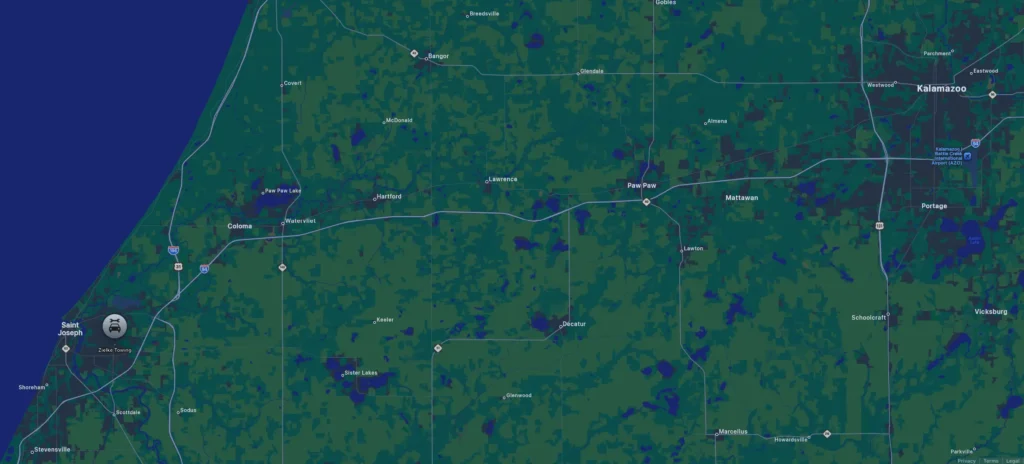
The short answer is: Yes — fully loaded trucks can be safely towed, but only with the right heavy-duty equipment and certified operators. In Benton Harbor, St. Joseph, Coloma, Kalamazoo, and surrounding areas, Zielke Towing & Tire is one of the few companies equipped and trained to handle these situations professionally.
Fully loaded truck towing is not the same as regular heavy-duty towing. It requires specialized wreckers, weight assessments, cargo stabilization, and operator experience. That’s why trucking companies, owner-operators, and commercial fleets across Southwest Michigan rely on Zielke for safe, reliable, and legal heavy-duty towing.
Short Answer — Yes, Zielke Can Tow Trucks That Are Fully Loaded
With the right equipment, fully loaded trucks—including semis, box trucks, dump trucks, utility trucks, and commercial trailers—can be safely towed without removing cargo.
Zielke uses advanced heavy-duty wreckers and certified operators trained to handle:
-
Fully loaded semi-trucks
-
Loaded flatbed trailers
-
Box trucks with full cargo
-
Loaded dump trucks
-
Commercial fleet trucks
Their specialized heavy-duty towing units are capable of safely lifting, stabilizing, and transporting trucks that are still carrying their load.
However, there are scenarios where unloading is necessary—especially if the load is overweight, unstable, or hazardous. Those situations will be covered in later sections.
Why Loaded Truck Towing Requires Expert Operators
A fully loaded truck can weigh anywhere from 40,000 lbs to 80,000 lbs, sometimes more. The towing company must account for:
-
Weight distribution across axles
-
Load shifting (a serious risk on curved or uneven roads)
-
Road grade and traction (especially during winter)
-
Trailer type and connection point
-
Tow truck capacity ratings
-
State and federal towing laws
This is why fully loaded towing cannot be performed by light-duty or basic medium-duty operators. Heavy-duty certified teams—like those at Zielke—understand how to safely handle these weights without causing damage to the truck, cargo, or roadway.
Understanding GVWR, GVW & Payload — What Local Drivers Should Know
Before towing any loaded truck, operators must understand three essential weight terms:
GVWR (Gross Vehicle Weight Rating)
The manufacturer’s maximum safe weight limit for the truck + trailer + cargo.
GVW (Gross Vehicle Weight)
The current weight of the truck including the load. This is what matters most during towing.
Payload Capacity
How much cargo the truck can safely carry without exceeding GVWR.
Why does this matter?
Because fully loaded trucks in Southwest Michigan often run:
-
At maximum legal weight for interstate travel
-
Overweight due to agricultural loads
-
Unevenly loaded (common in pallet shipments)
-
Heavier during winter due to snow & ice buildup
Zielke’s heavy-duty team always checks weight considerations before choosing the safest towing or recovery method.
Heavy-Duty Tow Trucks Zielke Uses for Fully Loaded Vehicles
Towing a fully loaded truck is not something every towing company can do. It requires specialized equipment that can handle extreme weight safely. Zielke Towing & Tire is equipped with high-capacity heavy-duty wreckers capable of lifting, towing, and recovering trucks weighing 40,000–80,000+ lbs while still fully loaded.
Their fleet includes:
Heavy-Duty Wreckers (35–75 Ton Capacity)
These trucks are engineered to lift and transport loaded semis, dump trucks, and box trucks with ease. Learn more about their capabilities on the heavy-duty towing page.
Rotator Tow Trucks for Complex Recoveries
When accidents block I-94, rollovers occur on I-196, or loaded vehicles slide into ditches along M-139, rotator equipment is often necessary. Although not every situation requires a rotator, Zielke has the tools and training to respond when one is needed.
Flatbeds, Wheel-Lifts, and Specialty Equipment
While these are more common for lighter vehicles, flatbeds and wheel-lift trucks also support the process when attachments, dollies, or frame lifts are needed. You can explore each option:
Safety Requirements for Towing Fully Loaded Trucks
Heavy-duty towing requires strict safety protocols—especially when the truck is loaded. Zielke follows industry best practices and Michigan regulations to ensure each tow is safe and compliant.
Cargo Stability Comes First
Before towing, operators verify that the cargo is stable and not shifting. Load shifting is one of the biggest dangers, especially on curved routes or uneven rural roads near Coloma or Paw Paw.
Verifying Legal and Safe Weight
If the truck is overloaded beyond legal axle weight limits, it may need partial unloading. This prevents damage to both the towed vehicle and the tow truck.
Brakes, Suspension & Trailer Attachments
Operators check the condition of:
-
Air lines
-
Locking mechanisms
-
Trailer connections
-
Brake systems
-
Suspension condition
A compromised system increases the risks during transport.
Weather & Road Conditions
Winter weather around Benton Harbor brings heavy snow, black ice, and sudden whiteouts. Heavy-duty tows during winter require extra caution, proper rigging, and slow, controlled towing speeds.
Common Situations Where Drivers Call Zielke to Tow Loaded Trucks
Truckers and fleet managers in Southwest Michigan frequently face issues that require fully loaded towing. Below are the most common breakdowns and recoveries:
Engine or Transmission Failure
Long-haul trucks pushing uphill on I-94 or I-196 often experience engine or transmission issues under heavy load. Zielke can tow loaded trucks to safety and provide roadside diagnostics through:
Brake Failure or Overheating
Heavy loads put stress on brake systems, especially in stop-and-go traffic near St. Joseph or when descending grades.
Jackknife or Rollover Accidents
Fully loaded semis are more likely to jackknife in winter. Recoveries often require winching or rotator assistance through:
Slide-Offs and Ditch Stucks on Rural Roads
Soft soil, muddy shoulders, and snowy banks around Coloma or Paw Paw create many recovery calls.
Electrical or Drivetrain Failures
Sudden electrical shutdowns or drivetrain damage are also common. Zielke provides:
Legal Rules for Towing Fully Loaded Trucks in Michigan
Towing a fully loaded truck isn’t only about equipment—it must follow strict Michigan and federal regulations. Zielke’s heavy-duty towing team is trained to follow these rules on every call.
Michigan Axle Weight & Load Laws
Michigan enforces weight limits for each axle group. If a truck exceeds these limits, even a capable wrecker cannot legally tow it without off-loading some cargo. This protects:
-
The tow operator
-
The truck’s axles
-
State highways like I-94 and I-196
-
The general public
When Unloading Is Legally Required
A fully loaded truck may need partial or full unloading if:
-
The truck is overweight or over-axle
-
The cargo is unstable, leaking, or hazardous
-
The trailer frame is damaged
-
The load shifted during a crash or sharp turn
-
The truck is carrying liquid loads that slosh dangerously
If unloading is necessary, Zielke’s team will clearly explain the next steps before towing.
Certified Operators Only
Heavy-duty loaded truck towing must be handled by operators trained in:
-
DOT regulations
-
Commercial vehicle weights
-
Rigging and recovery
-
Load securement laws
-
Hazard assessment
This is why commercial fleets trust Zielke to handle emergency situations safely and legally.
Cost of Towing a Fully Loaded Truck in Benton Harbor
Because fully loaded truck towing requires:
-
Larger wreckers
-
Certified heavy-duty operators
-
Specialized lifting equipment
-
Extra safety precautions
…the price is naturally higher than standard towing.
Typical cost breakdown:
1. Heavy-Duty Hook-Up Fee
Starts higher than standard towing due to equipment size and operator certification.
2. Per-Mile Rate
Mileage varies depending on whether the truck is being towed:
-
To a repair shop
-
Across cities (Benton Harbor → Paw Paw / Kalamazoo)
-
Long-distance out of county
3. Recovery or Rotator Fees
If the truck is jackknifed, rolled over, or stuck, specialized recovery is required. Zielke offers professional vehicle recovery service and advanced winch-out service.
4. Additional Fees
Depending on the situation:
-
Hazard handling
-
Night or holiday service
-
Load stabilization
-
Traffic management
Zielke always provides transparent, upfront pricing, so drivers and fleet managers know exactly what to expect.
When the Load Must Be Unloaded Before Towing
Fully loaded trucks are safely towable most of the time. However, unloading may be required if:
-
The truck exceeds Michigan’s legal weight limits
-
Cargo is at risk of spilling or shifting
-
The trailer is structurally compromised
-
Hazardous materials pose a safety risk
-
The truck is stuck in a position where towing it loaded could cause rollovers
In these cases, Zielke’s heavy-duty team will recommend the safest method, even if it means off-loading part of the cargo first.
How Drivers Should Prepare Before Calling Zielke
Drivers and fleet managers can make the towing process faster and safer by:
1. Securing Cargo
Ensure pallets, straps, or boxes haven’t shifted.
2. Engaging the Brakes & Air System
Lock the brakes if directed and disconnect air lines if the tow operator advises.
3. Providing Weight & Load Information
Knowing approximate cargo weight helps Zielke choose the right truck.
4. Sharing Exact Breakdown Location
Especially on highways—mile markers on I-94 and I-196 are extremely helpful.
FAQs About Towing Fully Loaded Trucks
Can a fully loaded semi be towed without unloading?
Yes, as long as weight and stability are safe.
Can Zielke tow a fully loaded dump truck?
Absolutely. Their heavy-duty towing units can handle it.
Is a rotator required for every loaded recovery?
No—but it is required for rollovers, jackknifes, and complex highway incidents.
Does insurance cover towing a loaded truck?
Most commercial insurance plans cover heavy-duty tows.
Will towing damage the truck?
Not when performed by trained specialists like Zielke.
Conclusion — Trust Zielke for Fully Loaded Heavy-Duty Towing in Southwest Michigan
Whether you’re dealing with a breakdown on I-94, a jackknife on I-196, or an engine failure on M-139, Zielke Towing & Tire has the equipment, certification, and experience to tow fully loaded trucks safely and legally. Their 24/7 team specializes in challenging recoveries and responds quickly across Benton Harbor, St. Joseph, Coloma, Kalamazoo, and Paw Paw.
For immediate heavy-duty help, visit their contact page.